
The Mom Funk and the Reality of Household Chaos
Picture this: You walk into the kitchen, and before you’ve even had your first sip of coffee, you’re stepping on a stray plastic toy, eyeing a mountain of breakfast dishes, and mentally triaging a checklist of a million things to do. Your phone is buzzing with reminders, the kids are arguing over a missing shoe, and the physical clutter around you feels like it’s magnifying the mental clutter inside your head.
As busy moms, our homes are the ultimate hubs of our lives. They are schools, offices, cafeterias, and playgrounds all rolled into one. But all too often, the frantic pace of modern motherhood turns our living spaces into chaotic command centers rather than peaceful sanctuaries. When you are constantly running on empty, trying to manage logistics while keeping everyone fed and emotionally regulated, a subtle shift happens. The house stops feeling like a safe haven and starts feeling like a never ending to-do list. It’s a heavy, draining vibe that many of us affectionately and exhaustedly call the Mom Funk. It is a completely normal, deeply relatable byproduct of a full, busy life, but it doesn’t have to be your baseline. I call out my name at this point “Zita the right mood”.
The Shift: How Home Energy Shapes Family Moods

It is easy to look at our homes as just a collection of walls, furniture, and objects. But the truth is, a home holds an emotional resonance. Think about how you feel when you walk into a cluttered, dimly lit room where the television is blaring in the background versus how you feel when you walk into a clean, sunlit room filled with a subtle, calming scent.
Children, in particular, are like little emotional sponges. They are incredibly sensitive to the ambient energy of their environment and the adults within it. No matter the age of the child, i have seen many instances in a home where there is no peace, a newborn baby keeps crying for no reason, you change diaper, feed the baby but the cry continues until the day the parents made peace and everything changed. The baby they thought that had a problem changed, now sleeps well and no sign of disturbing again. When a home’s atmosphere feels frantic, disorganized, and stressed, the nervous systems of everyone living there remain on high alert. This manifests as shorter tempers, more frequent toddler meltdowns, increased sibling rivalry, and a general sense of friction.
By recognizing that your physical environment directly impacts your family’s mental health, you reclaim your power as the emotional anchor of the home. When you intentionally shift the energy of your space from chaotic to calm, you aren’t just tidying up, you are actively co-regulating your family’s nervous systems and designing a backdrop for more peaceful, harmonious interactions.
The Promise: Small, Intentional Shifts (No Extra Time or Money Required)
Now, before you look at that mountain of laundry and feel a wave of guilt, let’s clear up a massive misconception: bringing positive energy into your home does not require a week-long wellness retreat, a pristine minimalist house, or an expensive, top-to-bottom home renovation. In fact, trying to force a flawless, picture-perfect home into a busy motherhood schedule will only create more stress. The secret lies in low-prep, stress-free micro-habits. It’s about small, intentional shifts that easily slot into the cracks of your already packed day, things that take less than five minutes but pay massive dividends in how your home feels.
Whether it’s opening the blinds to let natural light flood a room, swapping chaotic background noise for an uplifting playlist, or clearing just one single surface to give your eyes a place to rest, you can transform the vibe of your household. You don’t need extra time or a massive budget; you just need a little bit of intention. Let’s dive into the simple, practical ways you can clear out the static and invite a breath of fresh, joyful air into your home today.
Clear the Physical and Mental Static
Our outer world is often a reflection of our inner world. When our living spaces are cluttered and chaotic, our brains interpret that visual stimuli as unfinished business, keeping our cortisol levels subtly elevated. For a busy mom, an overload of physical static makes it nearly impossible to find mental clarity. However, you don’t need to spend hours deep cleaning to fix this. By implementing a few low-prep, high impact strategies, you can quiet the visual noise and immediately lighten the energy of your home.
The 5-Minute Surface Sweep
When you look at a messy house, it’s easy to feel paralyzed by the sheer volume of things out of place. Instead of aiming for a perfectly pristine home, focus your attention on just one high traffic, visible surface. For most families, this is the kitchen island, the dining room table, or the entryway console the notorious clutter magnets where mail, keys, stray toys, and half-filled water bottles go to live.
The psychology behind the 5-Minute Surface Sweep is simple: it gives your eyes a place to rest. When you clear a single prominent surface, it sends a signal to your brain that the chaos is contained, instantly lowering your stress levels.
-
How to do it: Set a timer for five minutes. Grab a basket and sweep everything off that one chosen surface. Put away what you can immediately, and leave the rest in the basket to be sorted later when you actually have a free pocket of time.
-
The Result: Even if the rest of the room isn’t perfect, that one clean, open space acts as a visual anchor of calm in the middle of a busy day.
Letting the Light In and Stale Air Out
One of the fastest, most effective ways to shift the energy of a room costs absolutely nothing and takes less than sixty seconds. First thing in the morning, make it a non negotiable ritual to throw open your curtains, pull up the blinds, and let natural light flood your home.
Sunlight triggers the release of serotonin, the hormone responsible for boosting your mood, promoting focus, and helping you feel calm. If weather permits, crack open a few windows as well, even just for ten minutes. Overnight, our homes trap stale air, dust, and lingering cooking smells, which can contribute to a heavy, sluggish atmosphere.
-
Why it works: Crisp, moving air literally clears the physical stagnation out of a room. It replaces the heavy morning fog with a literal breath of fresh air, instantly awakening your senses and signaling a fresh, positive start to the day for both you and your kids.
The One-In, One-Out Rule for Kid Clutter

It’s a common maternal grievance: you spend twenty minutes picking up the living room, only for a tsunami of toys to explode across the floor five minutes later. When kid clutter completely hijacks common adult spaces, it creates a subtle undercurrent of resentment and exhaustion. To protect the energy of your shared living areas, you need simple, gentle boundaries.
The One-In, One-Out rule is a highly effective, low-stress boundary for managing toy rotation. It teaches children respect for their environment while keeping the physical volume of toys manageable.
-
How to implement it: Keep a curated, limited selection of toys in common areas (like the living room or kitchen) in easily accessible baskets. If your child wants to bring a new toy or activity down from their bedroom or the playroom, they must choose one toy currently in the living room to take back up first.
-
The Big Picture: This simple practice prevents toy creep, keeps your common spaces feeling like a family home rather than a chaotic daycare, and makes the eventual evening cleanup a breeze rather than a battle.
Awaken the Senses Low-Prep Atmosphere Changers
When we think about changing the energy of a home, we often default to visual tasks like cleaning or organizing. However, our emotions and stress levels are deeply tied to all of our senses. By intentionally shifting what we smell, hear, and see in our immediate surroundings, we can instantly alter the atmosphere of our home. These low-prep sensory upgrades take almost no time to set up but have a profound, immediate effect on the nervous systems of both weary moms and energetic kids.
The Power of a Signature Scent
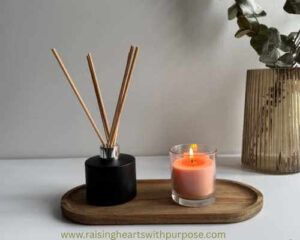
Scent is the fastest gateway to the brain’s emotional center. The moment a fragrance hits your nose, it can either trigger a stress response or induce a wave of calm. If your home currently smells like lingering dinner prep, old gym bags, or just stagnant air, it contributes to that heavy Mom Funk. You can easily reset the vibe using safe, natural aromatics. Please check for allergies.
-
Diffusing for a Mood Shift: Essential oil diffusers are a busy mom’s best friend. In the morning, try diffusing bright, invigorating citrus oils like sweet orange, grapefruit, or lemon mixed with a hint of peppermint. Citrus oils are scientifically proven to help reduce anxiety and boost alertness, making them perfect for powering through morning routines. In the late afternoon, the notorious witching hours, witch to calming oils like lavender, chamomile, or cedarwood to signal to everyone’s nervous system that it is time to wind down.
-
The Low-Prep Stovetop Simmer: If you don’t have a diffuser, a natural stovetop simmer is magic. Simply fill a small pot with water and toss in whatever you have on hand: a few sliced lemons or oranges, a couple of cinnamon sticks, a dash of vanilla, or a few sprigs of fresh rosemary. Let it simmer on low. Within fifteen minutes, a cozy, inviting aroma will wrap around the entire house, making it feel like a high-end boutique hotel or a comforting bakery.
An Intentional Soundtrack
Think about the auditory backdrop of your home on a typical weekday. Is the television running constantly in the background? Oh my husband is good with high sounds, something it gets me how someone can enjoy a music on a high volume. I’m forced to always ask him, if he is really enjoying the songs. Are toys blaring electronic noises while kids shout over each other? This kind of chaotic auditory static keeps our brains in a perpetual state of low-grade sensory overload. One of the easiest ways to shift household energy is to turn off the TV and replace it with an intentional soundtrack on low volume.
-
Curing the Afternoon Slump: Around 4:00 PM, when energy levels dip and tempers flare, try turning on an upbeat acoustic playlist, light jazz, or cheerful folk music. Music has an incredible ability to regulate moods; it can inject joy into a monotonous chore or instantly diffuse sibling tension.
-
Lo-Fi Beats for Focus and Calm: If you or your kids need to wind down or focus (like during homework or quiet time), switch to instrumental lo-fi beats or classical piano. Because there are no lyrics, your brain doesn’t have to work to process words, allowing the nervous system to relax into a state of calm focus. It acts as a gentle, acoustic blanket that absorbs the sharp edges of a loud household.
Bringing Nature Indoors

There is a reason we feel refreshed after a walk in the park: humans have an innate need to connect with nature. When we are stuck indoors managing a household, bringing elements of the outside world inside can drastically lift the energetic frequency of our living spaces.
-
The Low-Maintenance Magic of Houseplants: You don’t need a green thumb to reap the benefits of indoor plants. Hardy, low-maintenance varieties like Pothos, Snake Plants, or ZZ Plants require minimal watering and can thrive in almost any lighting condition. Not only do they naturally filter toxins from the air, but their vibrant green color adds a living, breathing element of peace to any room.
-
The Budget Grocery-Store Bouquet: You do not need to wait for a special occasion to have fresh flowers, nor do you need to spend a fortune at a florist. On your next grocery run, pick up a cheap $5 or $10 bundle of eucalyptus or simple daisies. Drop them into a mason jar or a simple vase right on the kitchen island or dining table. Every time you catch a glimpse of those living petals while wiping down counters or prepping snacks, it provides a micro-dose of beauty and joy, reminding you that your home is a place where life blooms.
Cultivate Connection Zones over Perfection
In the thick of busy motherhood, it is incredibly easy to fall into the trap of treating our homes like a never ending checklist. We get so consumed with managing the physical space, scrubbing counters, folding laundry, organizing closets, that we forget our homes are meant to be a soft landing place for the people inside them.
Bringing positive energy into your home means prioritizing connection over perfection. By creating intentional connection zones, you shift the focus away from pristine order and toward spaces that actively invite bonding, gratitude, and a sense of calm security.
Connection Before Correction (The Floor-Level Oasis)

In the world of gentle parenting, there is a golden rule: connect before you correct. When a child is melting down or an adult is completely overwhelmed, it is usually a sign that their internal emotional tank is empty. To make it easy to refill those tanks, design small, physical spaces in your home meant purely for pausing, regulating, and bonding.
-
Setting Up a Low-Prep Cozy Nook: You don’t need an empty spare room to make this happen. Find a quiet corner of the living room or a spot under a window and place a soft rug, a few plush floor pillows, and a basket of favorite books or quiet toys. Keep this zone completely free from the pressure of chores or electronics.
-
Why it Works: Having a designated, floor-level oasis changes your physical perspective. When you get down on the floor with your kids in a space built for comfort, it instantly lowers your defenses and theirs. It becomes the safe spot where you go to cuddle after a tough afternoon, read a story together, or simply sit eye-to-eye to help a child self-regulate. It shifts the home’s energy from a place of constant direction and rules to a place of mutual safety.
The Gratitude Wall or Board
When the daily grind gets frantic, our brains naturally default to noticing what is going wrong, the spilled milk, the missed deadline, the sibling argument. To pivot the entire family’s mindset toward positive energy, you need a visual prompt that forces a pause and highlights what is going right.
-
The Low-Stress Post-It Setup: Pick a visible, high-traffic spot in your kitchen, such as the side of the refrigerator or a small blank wall space. Hang a simple framed chalkboard or just designate a specific section of the wall as your family’s Gratitude Zone. Keep a pad of sticky notes and a pen nearby.
-
The Ritual: Encourage everyone including yourself to write or draw one small thing that made them smile that day and stick it to the wall. It can be as simple as The sunny weather, We had tacos for dinner, or Mom gave me a big hug. The Impact: This simple, low-prep visual element acts as an immediate mood lifter. Every time you stand at the counter prepping snacks or washing dishes, your eyes will catch these little colorful declarations of joy. It serves as a beautiful, daily reminder to the whole family that even on the hardest, busiest days, there is always good to be found.
Creating a Calming Drop Zone
The energy of your home is often dictated by how you feel the exact moment you step through the front door. If you walk inside only to trip over a pile of shoes, drop your bags on a cluttered floor, and immediately feel a wave of claustrophobia, your nervous system instantly switches to high alert. A frantic entryway sets a stressful tone for the rest of the evening.
-
Designing a Functional Entryway: You don’t need an expansive, Pinterest-perfect mudroom to fix this. A calming drop zone just requires a few intentional boundaries. Install a row of sturdy hooks at a child’s eye level for backpacks and jackets, place a wide basket or low bench strictly for shoes, and set up a small dish specifically for keys and sunglasses.
-
The Energetic Threshold: By giving every essential item an immediate, effortless home the second you walk in, you eliminate the frantic Where is my shoe? or Where are my keys? panic. Coming home transforms from a stressful transition into a welcoming embrace, signaling to your brain that the outside noise can be left at the door, and you are finally safe in your sanctuary.
Establishing Rituals That Anchor the Day

When life feels like a blur of carpools, meal prep, and endless logistics, time can easily start controlling you rather than the other way around. Without intentional boundaries, a household’s energy can quickly become frantic.
To counteract this, you need anchoring rituals. These aren’t rigid, demanding routines that add to your to-do list; rather, they are simple, predictable transitions that bookmark your day. By structuring how your day begins, resets, and closes, you create a sense of emotional security and rhythm that stabilizes the entire family.
The Morning Reset
As moms, we often default to waking up to the sound of a child crying or a toddler jumping on our bed. Instantly, our adrenaline spikes, and we are forced into a reactive state, scrambling to meet everyone else’s needs before we’ve even taken a breath. Starting your day this way ensures that you carry a frantic, hurried energy into the rest of the household.
-
The 2-Minute Window: You don’t need to wake up at 5:00 AM to perform an elaborate, hour-long wellness routine. The Morning Reset is a micro-ritual designed to take just two to five minutes before your kids wake up.
-
How to Anchor Yourself: Sit on the edge of your bed or stand by a sunny window. Before looking at your phone, take three deep, slow belly breaths. Wrap your hands around a warm cup of coffee or tea, focusing entirely on the warmth of the mug and the quiet of the room. Do a quick, full-body stretch to release overnight tension.
-
The Liftoff: This tiny pocket of intentional silence allows you to choose your mindset for the day rather than having it dictated by the morning rush. When you step out of your room feeling centered, you act as a calm emotional anchor for your children when they wake up.
The Evening Brain Dump and Family Pickup
The chaotic morning rush is almost always born the night before. Walking into a messy kitchen or realizing no one packed a lunch at 7:00 AM is a recipe for instant anxiety. You can eliminate this AM panic by creating a cooperative evening wind-down ritual that gets everyone involved.
-
The 10-Minute Family Pickup Game: Instead of spending your precious evening hours deep-cleaning alone while feeling resentful, turn tidying into a quick family game. Set a timer for 10 minutes, put on a fun, upbeat song, and challenge the kids to get as many stray items into their proper baskets before the timer goes off. Making it a collective effort teaches children responsibility and protects your evening energy.
-
The Evening Brain Dump: Once the kids are in bed, take five minutes to do a physical and mental reset for the next day. Lay out clothes, pack the bags, and do a literal brain dump on a piece of paper. Write down every single to-do, worry, or reminder swirling in your head.
-
The Relief: Getting these thoughts out of your head and onto paper signals to your brain that it is safe to stop processing, ensuring a more peaceful night’s sleep and a stress-free start to the next morning.
The Bedtime Scent and Lighting Shift
Our bodies operate on a circadian rhythm that relies heavily on environmental cues to know when to produce melatonin and wind down. In many modern homes, bright, harsh overhead LED lights blare until the moment we switch them off to sleep. This sudden transition keeps our nervous systems wired, making bedtime an uphill battle of bedtime stalling and hyperactive kids.
-
Flipping the Ambient Switch: Exactly one hour before bedtime, make it a household ritual to turn off all aggressive, overhead lighting. Instead, turn on a few warm-toned floor lamps, table lamps, or string lights.
-
Pairing with Scent: At the exact same time, turn on your bedroom and hallway diffusers with a relaxing, sleep-inducing blend like lavender, vetiver, or Roman chamomile.
-
The Behavioral Transition: This visual and sensory shift acts as an immediate environmental cue for the whole family. Without you having to yell or repeatedly announce that it is bedtime, the dim, warm environment naturally triggers a drop in cortisol and an increase in melatonin. The entire house slows down, voices drop to a lower register, and the day transitions into a peaceful, restful close.
Progress Over Perfection
Creating a positive atmosphere at home isn’t about having everything perfectly organized, always staying calm, or getting every parenting decision right. It’s about making intentional choices each day that invite more love, patience, and peace into your family life. Small, consistent actions often create the biggest shifts over time.
Remember, a positive home isn’t a flawless home, it’s a place where grace is given freely, mistakes become learning opportunities, and love is allowed to grow through every season.
What is one small thing you’re going to do today to shift the energy in your home? Share your thoughts in the comments below, I’d love to hear from you and cheer you on in your journey toward a more peaceful and joyful home.
You will also love to look at our Gentle parenting