How to Survive 4th of July Fireworks with a Toddler (A Sensory Survival Guide)
Picture this: It’s 9:45 PM on the Fourth of July. The air is warm, the smell of backyard barbecues is lingering, and you are standing in a crowded park, gripping a diaper bag like a shield. Around you, families are laughing, but your heart is racing. You are watching the clock, trapped in that agonizing, relatable holiday limbo.
On one hand, you desperately want to make those magical summer childhood memories, the kind you see in picture-perfect Instagram grids. On the other hand, you are feeling a deep, overwhelming dread. You know that within fifteen minutes, the sky is going to explode, your toddler’s sleep schedule is going to be completely shattered, and you are likely looking at a high-intensity sensory meltdown of epic proportions.
If the thought of Independence Day fireworks fills you with more anxiety than holiday cheer, I want you to take a deep breath. You are not alone, and you are not ruining the holiday.
It is completely, 100% normal for toddlers to be absolutely terrified of fireworks. As adults, we see a brilliant, festive light show. But to a two-year-old? Their little nervous systems don’t register celebration. When unexpected, chest-rattling booming sounds echo through the dark and flashing lights pierce the sky, their brains don’t think party, they think danger. It triggers a primal, fight-or-flight survival response. When they scream, cling to you, or melt down, they aren’t being difficult or throwing a tantrum; they are genuinely terrified.
This guide isn’t about forcing your child to sit through a loud show or tough it out for the sake of a family photo. Instead, consider this your sensory-smart survival roadmap. Whether you decide to head out to the community display with an ironclad exit strategy, watch the lights from a quiet distance, or skip the big booms entirely to protect bedtime, these practical, low-prep strategies will protect your child’s emotional baseline and your sanity.
Connection Before Correction: What to Say When the Booms Start

When the first loud crackles and chest-rattling booms echo through the night sky, our instinctive parental reaction is usually to comfort by dismissing. We default to well-meaning phrases like, You’re fine!, It’s just a noise, don’t cry, or Look how pretty it is, there’s nothing to be scared of!
While we say these things to offer reassurance, to a toddler, they actually have the opposite effect.
When a child’s nervous system enters a state of high alert, their survival instinct is screaming that they are in danger. If we respond by telling them they are fine, we inadvertently invalidate their reality. They think: I feel terrified, but mom says everything is okay. If she doesn’t see the danger, who is going to protect me? When something like this plays out, my Muna will let you know his fears for example, he will say mummy look it is coming, letting you know that your words are not working, in order to change strategy until you sound right, before he can be convince. This disconnect increases their panic, breaks their sense of safety, and can escalate a momentary fright into a full-scale emotional meltdown.
Instead of trying to talk them out of their feelings, we need to practice connection before correction. We must meet them in their fear, validate their experience, and act as their emotional anchor. When we co-regulate with our children, we lend them our calm until their nervous system realizes they are truly safe.
Actionable Language: Copy-and-Paste Scripts for Moms
The next time a loud firework goes off and you see your toddler’s eyes widen or their bottom lip start to quiver, use these intentional, calming scripts.
Script 1: For Pure Validation & Safety
This script is perfect for the initial shock of the noise. It focuses entirely on emotional safety without trying to change how they feel.
Those booms are so big and loud. It’s okay to feel scared, sweetheart. My body is right here, and I am keeping you safe. I’m not going anywhere.
Script 2: For Gentle Reframing & Connection
Once they know you understand their fear, you can gently reframe what is happening in a toddler-friendly way, turning the unpredictable noise into a shared, physical game.
The sky is making big, happy noises for the party, but they are very, very loud for our little ears. Let’s squeeze each other tight like a bear whenever a loud one comes. Ready? Big squeeze!
Script 3: For Anticipating the Next Noise
If the fireworks are continuous, help them anticipate the sensory input so they aren’t constantly startled.
There is going to be another big pop soon. It might make our bellies jump. Let’s hold hands super tight and count to three together. We can handle the loud noises together.
The Sensory Action: Grounding Their Nervous System
Words are powerful, but a dysregulated toddler operates entirely out of the emotional, sensory right side of their brain. They need physical, somatic proof that they are secure.
To make these scripts truly effective, combine your words with deep pressure input. Deep touch pressure acts as a natural brake for the central nervous system, lowering heart rates and reducing cortisol levels.
-
The Bear Hug: Pull your toddler tightly against your chest, wrapping your arms securely around their torso. Let them bury their face in your neck or shoulder to block out the flashing visual stimuli.
-
The sandwich Compression: If you are sitting down, place them in your lap and apply firm, steady pressure down their thighs and arms with your hands.
-
Deep Breathing Sync: As you hold them tightly, exaggerate your own breathing. Inhale deeply and exhale slowly and loudly. Their nervous system will naturally begin to mimic your respiratory rhythm, pulling them out of a fight-or-flight spiral.
By shifting your approach from stop crying, it’s fine to I hear it too, and I’ve got you, you transform a terrifying sensory assault into a profound moment of connection.
The Escape Route Strategy: Viewing From a Safe Distance
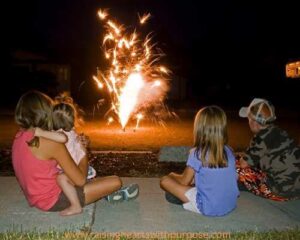
If you still want to experience the magic of a community fireworks display but know that sitting on a blanket on the crowded launch field is a recipe for disaster, you need a compromise. Enter the Escape Route Strategy.
This approach allows your family to participate in the holiday spirit while maintaining complete control over your environment, sensory levels, and proximity to the chaos. It’s about being close enough to see the magic, but far enough away to protect your toddler’s peace.
The Tailgate Trick: Your Mobile Sensory Bubble
One of the best sensory hacks for parents of toddlers is the Tailgate Trick. Instead of joining the crowds at the local park or stadium, find a parking lot, a high ridge, or an open field about a half-mile to a mile away from the launch site.
Pack your car or SUV into a spot, pop the trunk or tailgate, and set up your viewing station.
-
The Sound Buffer: When the show begins, you have an immediate volume dial. If the noise is too intense, simply close the trunk, pack everyone inside the car, roll up the windows, and turn on the AC. The metal, insulation, and glass of your vehicle act as a natural acoustic barrier, buffering up to 80% of the sharp, percussive sound waves while still giving your child a front-row seat to the colorful lights.
-
Controlled Environment: Inside the car, you control the climate, the lighting, and the background noise. You can play soft, familiar music or an audiobook to further mask the external thuds.
The Non-Negotiable Sensory Prep Gear
If you do decide to venture out of the car or sit in an open park, you must pack a dedicated sensory toolkit. Success lies entirely in the prep work you do before July 4th arrives.
1. Noise-Canceling Headphones (The Pre-Holiday Trial Run)
High-quality, child-sized hearing protection muffs are an absolute game-changer. They dull the sharp crackle of fireworks into low, manageable thuds. However, an anxious toddler will rarely tolerate a strange, tight object being jammed onto their head in a moment of panic.
-
The Hack: Introduce the headphones a week or two before the holiday. Let them wear them while watching their favorite show, or make a game out of it (Let’s put on our superhero ears!). If they associate the headphones with comfort and calm beforehand, they will accept them readily when the fireworks start.
2. Familial Comfort Anchors
In an unfamiliar, dark, and noisy environment, your toddler needs sensory anchors that scream home and safety.
-
The Lovey or Security Blanket: Bring the exact stuffed animal or blanket they sleep with. The familiar scent and texture provide immediate emotional regulation.
-
High-Value Snacks: Pack an assortment of special crunchy or chewy snacks (like fruit snacks, pretzels, or a bento-style snack box). Chewing and sucking actively engage the jaw muscles, providing proprioceptive input that naturally calms a dysregulated nervous system.
The Explicit Exit Strategy: No Guilt, No Hesitation
The absolute cornerstone of the Escape Route Strategy is a strict, no-guilt boundary. Before you even pack the car, you and your partner (or any family members joining you) must agree on a hard rule: If the toddler hits the red zone, we leave immediately.
There is no let’s just wait five more minutes, or we paid for parking so we need to stay. A full-blown sensory meltdown in a crowded space can take hours to recover from and can create long-term negative associations with summer events.
To execute a seamless escape:
-
Park on the Periphery: Never pull deep into the main parking lot or get boxed in on a dead-end street. Park as close to the exit route as possible, facing outward. It is worth walking an extra five minutes to your viewing spot if it means you can hop into your car and drive away instantly.
-
Be the First to Leave: The moment you see the warning signs hyperventilating, uncontrollable crying, hiding their face and refusing to look up pack up. Beating the gridlock traffic means you can drive home in a quiet car while the rest of the town is trapped in a honking, flashing parking lot with screaming children.
Remember, making a memory doesn’t count if everyone is miserable. Leaving early isn’t a failure; it’s a victory for your family’s emotional health.
Alternative No-Boom Celebrations: Protecting the Bedtime
As a parent, it is easy to succumb to the heavy weight of holiday FOMO (Fear Of Missing Out). You scroll through social media and feel like you are somehow depriving your child of a quintessential childhood milestone if you aren’t staying up past 10:00 PM to watch the local fireworks display.
But let’s get real for a moment: A well-rested toddler on July 5th is worth missing fifteen minutes of fireworks.
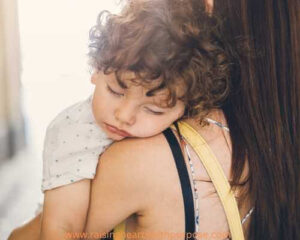
There is absolutely no shame in taking a pro-bedtime stance. Pushing a toddler two to three hours past their sleep window in a high-cortisol, high-sensory environment doesn’t just risk a meltdown during the show; it often triggers overtiredness that completely ruins sleep for days afterward. You have full permission to completely skip the neighborhood chaos, protect that sacred bedtime routine, and cultivate festive joy during daylight hours instead.
By shifting the focus of the holiday away from late-night explosions and toward low-sensory, high-connection family traditions, you can create a beautiful Independence Day experience that keeps everyone’s emotional baseline intact.
Low-Sensory Daytime Alternatives
You can pack a tremendous amount of festive, patriotic magic into the morning and afternoon, allowing you to wind down normally when the sun sets.
1. Local Morning Parades
Parades offer all the community excitement, bright colors, and American flags of a nighttime event, but with a fraction of the sensory distress.
-
Why It Works: Morning parades typically kick off between 9:00 AM and 10:00 AM, wrapping up well before noon. This timing fits perfectly into a toddler’s morning window, ensuring they are back home in their own crib just in time for a predictable afternoon nap.
-
The Strategy: While parades do feature fire trucks and sirens, the noise is passing rather than constant and percussive. Set up your folding chairs near the beginning of the parade route so you can see the show and leave before the crowds become too dense, or choose a spot a block away from the main hub to buffer the sound of the marching bands.
2. The Backyard Water Party
Instead of keeping them awake late into the night, use the heat of the afternoon to naturally tire out their bodies through sensory-rich water play.
-
The Set-Up: Lay out a simple splash pad, fill up a shallow plastic pool, or prep a bucket of low-prep water balloons. You can theme it by tossing in red, white, and blue bath toys or freezing plastic stars in ice blocks for a festive ice excavation game.
-
The Sensory Benefit: Heavy sensory play in the water provides intense vestibular and proprioceptive input. It works their large muscle groups, burns off nervous energy, and primes their nervous system for a deep, restorative night of sleep long before the neighbors start lighting off firecrackers.
Safe, In-House Firework Activities (After Dark)
When the sun finally goes down and the rest of the neighborhood begins to get noisy, you can create your own safe, silent, and visually mesmerizing light shows right inside the safety of your home.
1. The Glow-Stick Bath
This is an absolute fan-favorite hack for a stress-free holiday night. It bridges the gap between normal bedtime routines and festive novelty.
-
How to Do It: Run a normal, warm evening bath, but right before your toddler hops in, crack a dozen red, white, and blue glow sticks and drop them directly into the water. Turn off the overhead bathroom lights completely.
-
The Sensory Benefit: The dark bathroom immediately minimizes outside visual distractions, while the warm water calms the nervous system. The floating, glowing sticks create a quiet, mesmerizing, and entirely safe visual firework display that feels like an incredibly special treat but requires zero screen time or loud noises.
2. The Flashlight Dance Party
If your neighborhood is already starting to echo with distant thuds, use a deliberate distraction strategy in the living room to shift your toddler’s focus from auditory fear to visual play.
-
How to Do It: Draw the blackout curtains, dim the living room lights, and hand your toddler a couple of kid-friendly flashlights or a small rotating disco bulb. Turn on some upbeat, familiar music or a patriotic children’s playlist.
-
The Strategy: Spend fifteen minutes making shadow puppets on the wall, chasing light beams across the ceiling, and dancing out the last of their energy. The music helps drown out the sharp cracks from outside, and the physical movement substitutes scary environmental lights for a controlled, joyful festive experience.
By choosing these low-prep, high-joy alternatives, you aren’t skipping the 4th of July, you are simply engineering a holiday that respects your child’s current developmental stage.
Indoor Damage Control: Prepping the House for Local Neighborhood Noise

You have made the pro-bedtime decision. You’ve had a wonderful day of parades and backyard water play. Your toddler is bathed, fed, and tucked securely into bed by 7:30 PM. You breathe a sigh of relief, ready to relax.
And then, at 8:15 PM, the first mortar shell goes off in your neighbor’s driveway three houses down. It’s loud enough to rattle your windows.
This is the harsh reality that many parents face, even when they choose to stay home: Neighborhood noise is unpredictable and often louder than community shows. You might have opted out of the public celebration, but you cannot opt out of the sound waves generated by your neighbors. For a sleeping toddler, these sudden, percussive blasts are optimal disruptors.
The key to a peaceful night isn’t just ignoring the noise; it’s actively prepping your home environment to act as a defensive sensory shield.
Environmental Buffering: Building the Sound Fortress
To survive the neighborhood onslaught, you must think about acoustic layering. Your goal is to increase the distance and the density between the noise source and your child’s ears.
1. The Sound Layering Technique
Relying on a single sound machine is rarely enough against a nearby mortar blast. A sudden, sharp sound like a firework is defined by its immediate volume peak. A standard white noise machine might mask background buzz, but it won’t hide that peak. To do that, you need to layer sounds of different frequencies.
-
The Foundation: The White Noise Machine: Set your standard noise machine (like a LectroFan) to its highest comfortable volume. Place it on a nightstand between the window and your child’s crib, not across the room.
-
The Mid-Layer: The Box Fan: Introduce a mechanical box fan, set to medium or high, running simultaneously. The deeper, rhythmic hum of the fan blades provides a different frequency profile than the digital white noise, effectively filling in the sound spectrum.
-
The Soft Top Layer: Background Music: If your child is sensitive to mechanical sounds, consider adding a third layer. A small smart speaker playing soft, rhythmic classical music or a calming children’s audiobook adds another texture to the noise environment, making the sharp pops outside less distinct.
2. The Power of Blackout Curtains
We often focus exclusively on sound, but light is just as potent a sleep disruptor. Neighborhood fireworks create sudden, piercing bursts of multi-colored light that cut right through standard blinds. This flashing even if the sound is buffered is enough to startle a child out of a deep sleep cycle.
-
How They Work: True blackout curtains are made of dense, opaque, multi-layered fabric designed to absorb energy. In addition to sealing out light completely, this thick, heavy material also provides a surprisingly effective layer of acoustic insulation. It dampens the high frequencies of the neighborhood explosions before they even enter the room.
-
The Strategy: Ensure your blackout curtains are pulled completely closed before bedtime. If you don’t have them, consider improvising for the night. You can quickly pin a couple of dark, heavy blankets over existing window treatments. Any thick, non-translucent barrier will provide both light and sound defense.
By proactively layering the acoustics and blocking the visual stimuli, you are creating a stable sensory cocoon, ensuring that even if the neighborhood is noisy, your toddler’s room remains a peaceful oasis of sleep.
Reassurance
At the end of the day, it is incredibly easy to let holiday expectations steal your peace. You might hear the distant cracks of the grand finale from your living room while sitting in the dark, wondering if you should have just pushed through the bedtime routine or risked the crowds for the sake of the memory.
If those thoughts creep in, I want you to remember the ultimate takeaway: Missing the big community fireworks display this year does not mean you are ruining the holiday, and it absolutely does not mean your child is missing out.
Childhood magic isn’t measured by the decibel level of an explosion or how late a toddler stays awake. Magic for a two-year-old looks like the cold splash of water on a hot afternoon, the bright colors of a morning parade, and the absolute safety of being held tightly by a parent who listens to their fears. When you choose to protect their sensory thresholds and honor their need for sleep, you aren’t depriving them of an experience, you are giving them the gift of security.
Toddlerhood is a remarkably brief, intense season of development. Their little nervous systems are growing at lightning speed, and right now, they rely on us to filter a world that can easily feel overwhelming and loud.
By building a sensory-smart environment and practicing connection before correction today, you are laying a safe, trusting foundation for the future. There will be plenty of summers ahead for late-night hot dogs, sparklers, and grand finales. In just a couple of years, their emotional resilience will catch up to their curiosity, and they will genuinely stand beside you, looking up at the sky in absolute awe.
But for this year? Pat yourself on the back, pour yourself a cold drink, and enjoy the quiet victory of a peaceful night and a beautifully sleeping child. You are doing a wonderful job, mama. Happy Fourth of July!