It’s 4:30 PM. The toys that were exciting at 9:00 AM are now scattered across the living room floor, completely ignored. Your toddler is rubbing their eyes, whining at a frequency that pierces right through your nervous system, and clinging to your leg while you try to scrape together a basic dinner. It’s the dreaded witching hour, that raw, chaotic window where daytime energy expires, overstimulation peaks, and a massive meltdown feels entirely inevitable.
In these moments, the default survival instinct is often to reach for a screen. It’s a low-prep, instant fix to buy twenty minutes of peace. But as any parent who has dealt with the post-tablet emotional crash knows, digital screens don’t actually calm a toddler’s nervous system; they just freeze it. The second the TV turns off, the delayed meltdown erupts, twice as intense as before.
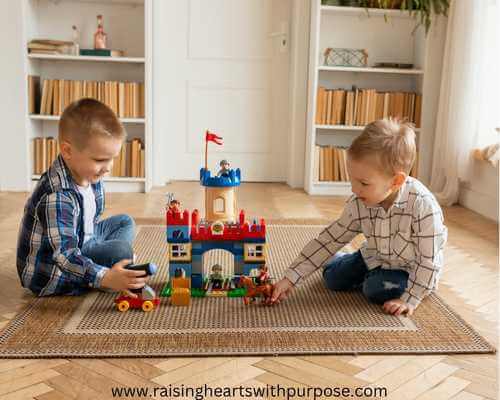
Then came the afternoon everything changed. Desperate to avoid another screen-time battle, I bypassed the flashing, singing electronic toys and pulled out a simple, forgotten plastic bin of chunky Lego bricks. I didn’t give instructions. I didn’t build a complex castle. I just sat on the rug, tipped the bin over, and snapped two bright blue blocks together.
What happened next felt like watching a storm clear in real-time. My Eze and Muna drifted over, sat down, and reached for a green brick. The whining stopped. The frantic, erratic energy settled into a quiet, deliberate focus that lasted for thirty uninterrupted minutes.

That was the moment I realized Lego isn’t just a toy to pass the time; it is a secret weapon for independent play and emotional regulation. When a toddler is spiraling, they don’t need flashing lights, structured rules, or passive entertainment. They need a sensory anchor, something tangible, predictable, and entirely under their control. Lego serves as an incredible open-ended tool that naturally builds a child’s capacity for independent play, while simultaneously functioning as a physical, screen-free emotional reset button for an overstimulated little brain.
Secret Weapon #1: The Magic of Open-Ended, Independent Play
The Trap of One-Way Toys
Walk down the toddler aisle of any toy store today, and you’ll find yourself bombarded by flashing lights, animatronic voices, and plastic gadgets that do everything for the child. These are what developmental experts call closed or one-way toys. A plastic spaceship that shoots plastic lasers, plays a pre-recorded sound effect, and drives itself across the floor has exactly one identity: it is a spaceship.
While these toys are highly effective at grabbing a toddler’s attention for the first five minutes, they suffer from a massive flaw: they require very little imagination. Once the toddler has pressed the button fifty times, the novelty wears off. The toy has done its party trick, leaving the child bored, under-stimulated, and looking right back up at you with the dreaded plea: “Mom, Dad, come play with me!”
Closed toys put the child in the passenger seat of play. When the toy does all the performing, the toddler quickly loses interest, leading to a constant cycle of parents needing to step in as the primary source of entertainment.
The Lego Difference
This is where Lego and Lego Duplo for younger hands flips the script. Lego bricks have zero rules, zero batteries, and absolutely no agenda. They are the ultimate open-ended toy.
To a two-year-old, a single bright red brick doesn’t have a fixed identity. In the span of five minutes, that brick can be a phone they hold to their ear, a piece of crunchy apple they pretend to eat, a car zooming across the rug, or the foundation of a sky-high tower.
Because Lego bricks require the child to do the work, the play becomes infinitely renewable. There is no right way to play with Lego, which eliminates the fear of failure. A toddler doesn’t need to look to an adult for instructions on how to make it work. The control shifts entirely back to the child, giving them the agency to build, destroy, and rebuild whatever exists in their imagination. My Eze and Muna will only be communicating the plays to you while i can be doing my writings.
Building the Focus Muscle

When a toddler sits down with a pile of Lego bricks, you can almost see the gears turning in their brain. This open-ended building naturally fosters low-frustration problem-solving. If a tower falls over, it isn’t a broken toy, it’s just an invitation to try a different base. If two pieces don’t snap together the first time, the child adjusts their grip, refines their hand-eye coordination, and tries again.
This process triggers what psychologists call a flow state, a mental state of deep immersion where a person is fully engaged in an activity for its own sake. For a toddler, entering a flow state is like exercise for their focus muscle.
Because the challenge level of building with Lego perfectly scales with their own developmental ability, they don’t get easily frustrated. They become content, self-contained, and deeply satisfied with their own independent creations. As a parent, watching your child enter this zone is nothing short of magical: the house goes quiet, the constant demands for your attention cease, and your toddler becomes entirely engrossed in a world they are building with their own two hands.
Secret Weapon #2: The Emotional Reset (The Calm-Down Tool)
Why It Beats a Screen Time Reset
When a toddler is on the brink of a massive emotional spiral, our parental survival instinct is often to reach for a screen. On the surface, it works flawlessly: the minute the television turns on or the tablet enters their hands, the crying stops, and their body goes completely still.
But this stillness is an illusion. Screens don’t actually soothe a toddler’s nervous system; they merely hijack it. High-paced digital media floods an already overwhelmed brain with rapid sensory input and dopamine. It essentially paralyzes the child’s behavior while keeping their internal stress levels entirely unaddressed.
Because screens mask overstimulation rather than fixing it, you are almost always guaranteed a catastrophic screen crash the moment the device is turned off. The delayed meltdown erupts with twice the intensity because the underlying emotional dysregulation was never processed, it was just put on pause.
Lego offers the exact opposite experience. Instead of forcing a child into passive consumption, it invites them into active, gentle engagement. It doesn’t numb their senses; it helps them organize them.
Sensory Grounding

The secret to Lego’s emotional regulation power lies in the concept of sensory grounding. When a young child is having a meltdown, their brain is in a state of chaotic fight-or-flight. They cannot logic their way out of it. To calm down, they need physical, predictable feedback that brings them back into their bodies.
Lego provides this through perfect, repetitive tactile inputs:
-
Proprioceptive Pressure: The physical push required to line up two bricks and press them together gives heavy work feedback to a child’s muscles and joints, which is deeply organizing and calming for a dysregulated nervous system.
-
The Auditory Click: The crisp, satisfying acoustic snap of two bricks locking together offers immediate cause-and-effect validation. It is a predictable, comforting sound in an otherwise overwhelming world.
-
Visual Sorting: When a child runs their hands through a pile of smooth plastic bricks, or begins instinctively grouping them by color or size, they are engaging in a rhythmic, low-stakes task.
This combination acts as a powerful form of mindfulness for toddlers. It slows their heart rate, regulates their breathing, and gently pulls their focus away from the emotional storm in their head and down into the tangible reality of their fingertips.
The Transition Object
Knowing that Lego works as a calm-down tool is only half the battle; the real magic is knowing how to introduce it when a meltdown is actively brewing. If you hand a screaming, flailing two-year-old a box of Lego and tell them to go build something, the box will likely fly across the room.
Instead, you must use yourself as a bridge, utilizing a technique known as co-regulation.
When you see the telltale signs of an impending emotional crash, do not say a word. Sit yourself down on the living room floor a few feet away from your child and dump a small pile of bricks in front of you. Ignore the whining or pacing, and simply begin building a very simple, repetitive tower. Snap a red piece on a blue piece. Snap a green piece on a yellow piece.
Your quiet, calm presence combined with the rhythmic click-clack of the bricks acts like a beacon. Toddlers are naturally imitative creatures. Within a minute or two, you will see their crying slow down. They will drift over, sit beside you, and watch.

They might start by violently knocking your tower down and that is perfectly okay. Let them destroy it. The physical act of pulling bricks apart is just as grounding as putting them together. Soon enough, they will reach for a brick of their own, sit down on the rug next to you, and quietly begin to build. The storm has passed, and the emotional reset is complete.
Practical Strategies: How I Make it Work
Understanding the theory behind Lego as a secret weapon is one thing, but setting it up for success in a busy, chaotic household is another. If you just dump a massive, thousands-piece tub of plastic onto the rug, you will likely end up with stepped-on bricks, a bigger mess, and an overwhelmed child.
To turn Lego into a seamless, daily tool for independent play and emotional resets, I rely on three specific, practical strategies.
Keep it Accessible but Organized: The Less is More Rule
When it comes to toddlers and toys, choice overload is a very real thing. A giant, bottomless storage bin filled with hundreds of clanging Lego pieces is visually and auditorily chaotic. Instead of inspiring creativity, it paralyzes it; a toddler doesn’t know where to start, so they end up just dumping the bin over and walking away.
To combat this, I follow a strict less is more rule by utilizing small, shallow trays or low-rimmed baskets rather than deep bins.
[Deep Toy Bin]  -->  Causes choice overload & frustration (Dump & Run)
[Shallow Tray]  -->  Provides high visibility & immediate focus (Build & Calm)
Instead of offering their entire collection, I curate a small selection of 15 to 20 varied bricks and place them on a dedicated play tray. A shallow tray allows your toddler to see exactly what they have to work with at a single glance, without having to aggressively dig and scramble through a mountain of plastic. It makes the invitation to play feel manageable, calm, and immediately approachable.
The Strewing Technique
One of the greatest passive parenting hacks in existence is a concept called strewing. Strewing is the art of strategically leaving enticing, open-ended materials in your child’s path for them to discover completely on their own, rather than explicitly telling them to go play with something.
Toddlers have an innate resistance to adult direction. If you say, “Go play with your blocks so mommy can make dinner,” they will almost instantly reject the idea. However, if they stumble upon an interesting setup entirely on their own terms, their curiosity takes over.
I practice strewing by leveraging the coffee table or a low shelf during transitional times of the day. Right before the late-afternoon witching hour begins, I will silently leave a half-built, absurdly tall tower or a loose, interesting geometric pattern of colorful bricks right in the middle of the table.
When my toddler walks into the room, their brain treats it like an unsolved puzzle. They are naturally drawn to investigate: “What is this? Can I make it taller? Can I smash it? Can I fix it?” By leaving the structure incomplete, you create an effortless psychological invitation that bridges them directly into deep, independent play without you having to say a word.
Safety & Age Mapping
To keep this strategy both safe and frustration-free, it is crucial to map the type of brick to your child’s specific developmental stage and motor skills.
| Age Stage | Brick Choice | Focus |
| Younger Toddlers (18M – 3Y) | Lego Duplo | Focuses on large muscle groups, grip pressure, and satisfying physical connections without fine-motor strain. Completely swallow-safe. |
| Older Toddlers / Pre-K (4Y+) | Standard Classic Bricks | Shifts toward intricate fine-motor control, precision hand-eye coordination, and complex spatial planning. |
Always remember that the transition from Duplo to classic Lego isn’t just about age, it’s about matching their current frustration threshold. If the pieces are too small and their fine-motor skills aren’t quite there yet, the toy ceases to be a calm-down tool and instead becomes a source of immense frustration. Keep it simple, keep it physically manageable, and let the size of the bricks naturally shrink as their confidence and coordination grow.
Reclaiming Peace, One Brick at a Time
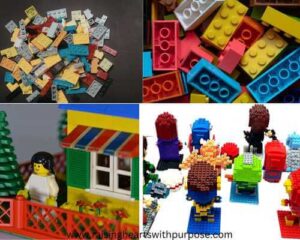
The Big Takeaway: Process Over Product
As parents, we sometimes fall into the trap of thinking our children need to build perfect, recognizable structures to be successful at playing. We look at the box art and think they need to make the exact house or the perfect car.
But here is the beautiful truth about using Lego as your secret weapon: you do not need to be a master builder, and neither does your toddler.
The magic doesn’t live in the final product. It doesn’t matter if your child builds a leaning, mismatched tower that collapses after three levels, or if they simply spend twenty minutes snapping two blocks together over and over again. The benefits are entirely in the process. Every clicked brick is a moment their brain is organizing sensory input, practicing low-frustration problem solving, and building independent focus. The value is found in the quiet, the concentration, and the gentle rhythm of the play itself.
Closing Thought
Parenthood is a beautiful, exhausting marathon, and those chaotic late-afternoon hours can test the absolute limits of your patience. It is completely okay to feel drained by the non-stop demands of entertaining a toddler.
So, the next time you feel the room getting loud, the whining starting up, and the familiar wave of parental burnout creeping in, skip the screen and reach for the brick tray. Sit down on the floor, snap a couple of pieces together, and let the science of open-ended play do the heavy lifting for you.
You aren’t just giving yourself a well-deserved slice of peace to breathe, drink a warm cup of coffee, or finish dinner in relative quiet. You are giving your toddler the space to discover their own capabilities, soothe their own nervous system, and build up their confidence, brick by beautiful brick.
You may also love one of our series Genius Screen-Free Activities