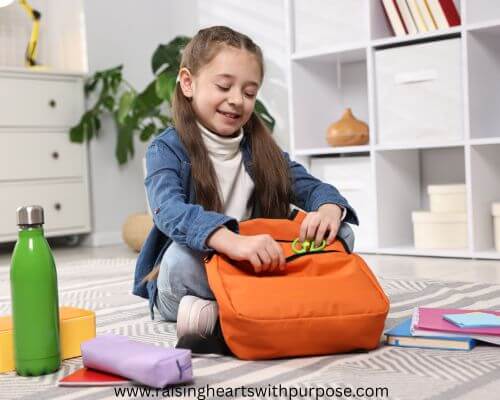
Emotional resilience is the ability to bounce back from stress, disappointment, and adversity, it isn’t something kids are just born with. It’s built, and the primary architects are their parents.
That part of parenting can feel heavy, but it’s also incredibly empowering. Kids don’t learn resilience from lectures; they absorb it through daily interactions, observation, and how their environment handles failure.
Papa and Mama follow me in this post to know How Children Learn Emotional Resilience from Their Parents designed to capture both the science and the heart of how this emotional inheritance works.
It happens in slow motion. The waffle cone tilts, the top scoop slides, and with a soft, devastating thud, a perfectly good scoop of strawberry ice cream hits the hot pavement.
In that exact split second, time stops. Your child stares down at the sidewalk, their lower lip begins to tremble, and the emotional temperature of the entire afternoon shifts.
As parents, our default, bone-deep instinct in this moment is survival and rescue. We want to fix it, sweep away the disappointment, and make the bad feeling disappear as fast as humanly possible. We instantly scramble for solutions: Don’t cry We can buy another one or Look, let’s go see the ducks instead We do this because watching our children experience distress hurts. It feels like an emergency.
But that sidewalk moment isn’t an emergency. It’s something much bigger: it is a masterclass in the making.
Redefining Resilience: It’s Not About Smooth Sailing
We often talk about emotional resilience as if it’s a bulletproof vest, a protective shield that keeps our kids from ever feeling sad, frustrated, or defeated. But true resilience isn’t the absence of distress. It isn’t a magical state of being where a child faces rejection, failure, or a dropped ice cream cone and simply smiles through it without a care.
Resilience is something far more grounded. It is the capacity to feel the full, heavy weight of a difficult emotion, sit in the discomfort of it, and navigate through it to the other side. It is the quiet inner voice that eventually says, “This really hurts right now, but I am safe, and I can handle it.”
If we shield our children from every minor heartbreak, we inadvertently teach them that distress is unmanageable. If they never experience the ripple of disappointment, they never get to practice the coping mechanisms required to recover from it.
From Protectors to Coaches

This is where our role as parents requires a profound perspective shift. For years, the traditional narrative told us that good parenting meant paving a smooth road for our children, removing obstacles, resolving conflicts before they escalated, and keeping life as friction-free as possible.
But we cannot protect our children from the world forever. The road will eventually get rocky.
Our job isn’t to build a perfectly smooth road for our children; it is to build strong kids who are capable of walking any road they encounter. We need to transit from being the protectors who shield them from stress to the emotional coaches who teach them how to process it.
When your child is drowning in a wave of frustration over a hard homework assignment, or sobbing over a lost soccer game, they don’t need you to step in and fix the grade or change the score. They need you to step into the storm with them, stay calm, and coach them through the emotional turbulence. By remaining anchored when they are spinning out, you show them exactly what regulation looks like. You become the blueprint for their recovery.
Core Pillar 1: The Power of Modeling (The Mirror Effect)
It is one of the most humbling realizations of parenthood: our children are rarely listening to what we say, but they are always watching what we do. I have seen my Eze, who is about one year and eleven month barely two years as at the time of my writing this post climb my table where i always keep my laptop, sit the way i always sit and imitate the way i write on the system.
When it comes to emotional resilience, we cannot teach what we do not practice. We can give our children beautiful, eloquent lectures on the importance of staying calm or thinking positively, but if they watch us throw a temper tantrum when a flight is delayed or melt down when we spill our coffee, that is the blueprint they will adopt.
Children are emotional detectives. They don’t just watch how we treat them; they watch how we treat ourselves and how we react to the world around us. This is known as the Mirror Effect. Your child’s developing nervous system uses your reactions to gauge whether a situation is a minor inconvenience or a code-red emergency.
1. Emotional Regulation: Being the Thermostat, Not the Thermometer

In any home, parents have a choice: we can be a thermometer, or we can be a thermostat.
A thermometer simply reflects the temperature of the room. If a child is melting down and screaming, a thermometer parent rises to meet that chaos, becoming flooded with anger and frustration. The emotional temperature spikes, and the situation explodes.
A thermostat, however, sets the temperature.
Child's Chaos: High Temp--->Parent Thermostat: Stays Cool--->Room Cools Down
When your child is spinning out of control, they are looking to you to see if their big feelings are dangerous. If you respond to their chaos with a deep, steady breath and a calm voice, you send a powerful signal to their brain: This feeling is big, but it is not an emergency. We are safe.
Modeling resilience doesn’t mean you never get stressed. It means you let your child see you catch yourself, take that deep breath, and actively choose a regulated response instead of an explosive reaction.
2. The Oops Factor: Normalizing Imperfection
Many parents carry the heavy burden of thinking they need to appear flawless in front of their kids. We hide our mistakes, cover up our frustrations, and pretend we have it all together. But perfection is actually a terrible teacher for resilience. If a child thinks their parents never fail, they will internalize their own mistakes as a sign that something is deeply wrong with them.
Resilience thrives when we normalize failure, and we can do this through the Oops Factor.
When you make a mistake whether it’s burning dinner, getting lost on the way to practice, or accidentally breaking a dish don’t hide it or minimize it with shame. Instead, call it out openly and walk your child through your recovery process out loud.
What it sounds like in practice:
Oops! I just realized I took the wrong turn and now we’re going to be ten minutes late. I feel a little frustrated right now, but it’s okay. I’m going to take a deep breath, call your coach to let them know, and we will get there safely. It’s just a mistake, and we can handle it.
By narrating your internal processing, you are giving your child a step-by-step manual on how to handle life’s daily friction. You are stripping the shame away from mistakes and replacing it with problem-solving.
3. The Power of the Parental Repair

Here is the ultimate reassurance for every tired parent: modeling resilience isn’t just about getting it right; it’s about what you do when you get it completely wrong.
There will be days when you lose your temper. There will be moments when the stress builds up, your patience snaps, and you yell. You are human, and your nervous system has limits.
When this happens, you have a golden opportunity to model one of the most advanced components of resilience: relational repair.
Once the storm has passed and your nervous system is back to its baseline, go to your child. Own your behavior without making excuses.
The Anatomy of a Perfect Repair:
I want to apologize for how I spoke to you earlier. I was feeling overwhelmed and stressed about work, but that is not an excuse for yelling. It wasn’t your fault, and it wasn’t okay for me to react that way. I’m working on taking a break when I feel that frustrated. I love you, and I’m sorry.
When you repair, you teach your child two massive resilience lessons. First, you show them that a mistake or an emotional outburst is not the end of the world, it can be fixed. Second, you show them how to take accountability with grace and humility. You are modeling the exact behavior you hope to see from them when they inevitably mess up in their own future relationships.
Core Pillar 2: Co-Regulation Before Self-Regulation
We live in a culture that deeply prizes independence. Because of this, it’s incredibly common for parents to expect self-regulation from their children far too early. When a child throws a massive tantrum over a broken crayon or a transition away from the playground, our logical adult brains want to say, “Calm down, you need to learn how to control your feelings.”
But here is the neurological truth: a child cannot learn to self-regulate unless they have experienced years of consistent co-regulation.
Children are not born with a fully mature prefrontal cortex, the area of the brain responsible for impulse control, logic, and emotional regulation. That part of the brain takes roughly 25 years to fully develop. Expecting a young child to calm their own nervous system during a massive emotional storm is like expecting them to drive a car or speak a fluent language without ever being taught.
They cannot do it alone. They must borrow your mature, calm nervous system to soothe theirs. This beautiful, messy partnership is what we call co-regulation.
1. The Chemistry of Connection: Borrowing Your Calm
Think of your child’s brain during an emotional meltdown as a house on fire. The downstairs brain has detected a threat whether that threat is a dropped ice cream, fatigue, or sensory overload and has triggered a full fight-or-flight response.
When a house is on fire, you don’t stand outside and yell at the flames to stop burning. You don’t hand the person inside a manual on fire safety. You bring water.
Child's brain On Fire<-Parent Pours Co-Regulation Calm, Presence<-Brain Cools Down & Recovers
Co-regulation is that water. When you physically lower yourself to their eye level, soften your gaze, relax your shoulders, and speak in a quiet, grounded tone, your calm nervous system literally communicates with theirs. Through proximity and steady presence, you send safety signals directly to their panicked brain, helping the emotional storm pass more quickly.
Every single time you co-regulate with your child, you are physically building the neural pathways they will eventually use to calm themselves down in the future.
2. Validating vs. Dismissing: Why You’re Fine Halts Resilience
When our children are upset over something that seems entirely insignificant to us, our natural instinct is to minimize it to make them feel better. We say things like:
-
It’s just a tiny scratch, you’re fine
-
Don’t cry, it’s not a big deal.
-
You’re acting like a baby over nothing.
While these phrases usually come from a place of wanting to cheer them up or stop the crying, they inadvertently send a confusing message to a child: What you are feeling right now is wrong, dangerous, or shameful.
When children are told their emotions aren’t valid, they don’t stop feeling the emotion. Instead, they stop trusting themselves. They learn to suppress their feelings, which leads to anxiety and emotional fragility later in life, the exact opposite of resilience.
Resilience begins when a child learns that all feelings are safe to experience. To teach this, we must replace dismissal with validation. Validating an emotion does not mean you agree with their behavior or give in to their demands; it simply means you acknowledge the reality of what they are experiencing.
The Shift to Validation:
Instead of: Stop crying, it’s just a toy, we can get another one.
Try: You are really sad that your toy broke. It’s hard when things we love get ruined. I’m right here.
3. The Art of Holding Space

One of the hardest parts of co-regulation is resisting the urge to be a fixer. When our child is sobbing or raging, we want to immediately offer a distraction, crack a joke, or solve the problem so the discomfort stops.
But true emotional resilience is built when a child learns to tolerate the discomfort of a hard feeling without running away from it. To teach this, parents must learn the art of holding space.
Holding space means sitting with your child in their darkness without trying to turn the lights on immediately. It means creating a safe container where they can cry, scream, or grieve a disappointment without you judging them, rushing them, or abandoning them.
How to Hold Space in 3 Steps:
Drop the Agenda: Stop trying to move them to the next activity or fix the issue right away.
Stay Physically Close: Sit nearby. If they allow it, offer a touch or a hug. If they push you away, stay within eyesight and say, “I see you need some space, but I am sitting right here on the rug whenever you’re ready.”
Use Fewer Words: When a child is emotionally flooded, their brain cannot process long lectures or logic. Use simple, grounding phrases: I hear you, It’s okay to cry, or I’m right here.
When you hold space, you show your child that their big, messy, terrifying feelings are not too heavy for you to carry. And if their feelings aren’t too scary for you, they will eventually realize they aren’t too scary for them to handle, either.
Core Pillar 3: Reframing Failure and the Growth Mindset
If you listen closely to a child struggling with a difficult task whether it’s tying their shoes, solving a math problem, or mastering a skateboard trick, you will often hear a sudden, sharp verdict: I can’t do this. I’m just bad at it.
In that single moment, the child is standing at a psychological crossroads. One path leads to a fixed mindset, the belief that talent and intelligence are static traits you are either born with or you aren’t. On this path, failure is an identity. It means I am not enough.
The other path leads to a growth mindset, a concept pioneered by psychologist Carol Dweck. A growth mindset is the deep conviction that abilities can be developed through dedication, hard work, and strategy. On this path, failure isn’t an identity, it is simply information. It’s a signpost that says, “This strategy didn’t work; let’s try a different one.”
Resilient children aren’t kids who never fail; they are kids who know how to interpret their failures. As parents, we act as the editors of their internal narrative, helping them reframe their setbacks into stepping stones.
1. The Language of Praise: Shifting from Outcome to Effort
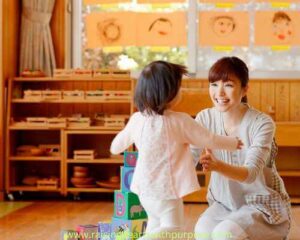
Many of us grew up in an era where well-meaning parents and teachers showered us with person-focused praise: You’re so smart, You’re a natural athlete, You’re a genius
While this feels wonderful in the moment, it actually sets a trap for a child’s resilience. When a child who has always been told they are so smart suddenly encounters a school subject that feels impossibly hard, their brain short-circuits. They think, If I am struggling, I must not be smart after all. To protect their identity as the smart kid, they begin to avoid challenges, give up easily, and fear failure above all else.
To build an unshakable growth mindset, we must pivot our praise away from inherent traits (the outcome) and direct it squarely at the process (the effort).
Person Praise: You're a genius -> Breeds fear of failure and risk avoidance.
Process Praise:I love how hard you tried->Breeds resilience and willingness to try again.
The Praise Pivot:
Instead of: You’re so artistic, that drawing is perfect
Try: Look at all the detail you put into those trees, I saw how carefully you chose those colors. You worked on that for a long time.
Instead of: You’re a natural soccer star
Try: I love how you didn’t give up on the field today, even when your team was down by two goals. You kept running and supporting your teammates.
By focusing on their focus, their strategy, and their grit, you teach them that progress is entirely within their control.
2. The Power of Yet
When a child feels defeated, their language becomes incredibly absolute. They use words like never, always, and can’t.
-
I’ll never get this right.
-
I always mess up my lines.
-
I can’t ride this bike.
These absolute statements act like emotional concrete, they lock the child into a state of permanent helplessness.
Fortunately, parents possess a magical, single-word tool that can instantly shatter this concrete and open up a world of possibility. That word is YET.
When your child drops their head into their hands and says, “I can’t do this,” your job is to gently but firmly insert that missing puzzle piece. You can’t do this yet.
The word yet is a powerful cognitive reframe. It acknowledges the very real frustration of the present moment while simultaneously promising that the future is wide open for growth. It changes the timeline from a dead end into a journey.
How to weave Yet into daily conversation:
Child: I hate reading. I don’t know the words.
Parent: Learning to read is like decoding a secret message. You don’t know all the words yet, but every day we practice, your brain gets a little faster at figuring them out.
3. Emotional Scaffolding: Breaking Down the Mountain
When a child experiences a setback or faces a massive new task, they don’t see a series of small, manageable steps. They see an insurmountable mountain. The sheer scale of the challenge triggers an overwhelming wave of anxiety, and their brain tells them to flee, melt down, or give up before they even start.
Resilient parents use a technique called scaffolding. Just like physical scaffolding supports a building while it’s being constructed, emotional scaffolding supports a child’s confidence while they build a new skill.
Scaffolding means stepping in to help your child break a massive, overwhelming obstacle down into tiny, bite-sized, achievable victories.
The Scaffolding Strategy in Action:
Imagine your child is in tears because they have to clean a completely disaster-struck playroom, or they are overwhelmed by a 20-piece puzzle.
Acknowledge the overwhelm: Wow, this room looks like a tornado hit it. It feels completely impossible to clean this up all at once, doesn’t it?
Shrink the target: We don’t need to clean the whole room right now. Let’s just find five blue blocks and put them in the bin. Can you find five?
Celebrate the micro-win: Look at that! The blocks are put away. You started the job. Now, should we tackle the books or the cars next?
When you scaffold, you aren’t doing the work for them. Instead, you are teaching them how to organize their thoughts and problem-solve through overwhelm. You are proving to them, through tangible action, that no mountain is too big if you know how to take the first small step. My Muna will say ”mama i don’t have strength for this now, but you need to see the proud look on his face when the first task is done and him saying that this is very easy and completing the rest.
Core Pillar 4: Creating a Safe Base (Secure Attachment)
Think of a child exploring a playground. They run toward the slides, climb the monkey bars, and mingle with other kids. But every few minutes, they do something fascinating: they stop, turn around, and look back to make sure their parent is still sitting on the bench. Sometimes, they’ll run back, lean against their parent’s knee for a quick thirty-second cuddle, and then bolt right back into the action.
In developmental psychology, this is known as the Safe Base phenomenon, a cornerstone of secure attachment.
    The World  <-- (Exploration, Risk, Adversity) ---  The Child
         ^                                                     |
         |                                                     v
                      --------- Returns to Refuel ---> Safe Base Parent
The paradox of emotional resilience is that children do not become brave, independent, and resilient by being pushed out into the cold alone to toughen up. They become resilient because they know, with absolute certainty, that they have a warm, safe, unwavering place to return to when things go wrong.
When a child has a secure attachment with a parent, they are much more willing to take positive risks, try hard things, and experience failure. Why? Because they know that failure might sting, but it will never cost them their security or their parent’s love.
1. Unconditional Worth: Detaching Performance from Love

The single greatest threat to a child’s long-term resilience is the belief that their parent’s love is conditional upon their performance.
When a child internalizes the message that they are only worthy of praise, warmth, and affection when they bring home straight A’s, win the championship game, or exhibit perfect behavior, they develop a fragile, conditional self-worth. They don’t become resilient; they become perfectionists driven by anxiety. To these children, failure isn’t just a bump in the road, it is a terrifying threat to their survival because it means they might lose their safe harbor.
Resilient children need to know that their worth is non-negotiable. They need to hear, see, and feel that your love for them is entirely separate from their achievements or mistakes.
How to communicate unconditional worth:
Before a big game or test: Instead of saying “Go get ’em, I hope you win!” try saying, “I love to watch you play. Win or lose, I can’t wait to grab a slice of pizza with you afterward.”
After a major failure or behavioral setback: I am really disappointed in that choice, and we are going to talk about how to fix it. But I want you to remember that I love you no matter what. Nothing you do could ever make me love you less.
By explicitly decoupling their behavior or performance from your love, you give them the emotional freedom to fail, learn, and try again.
2. Predictable Boundaries: The Invisible Safety Net
When we think of a safe base, we often picture endless soft cushions, cuddles, and validation. But a safe base without boundaries isn’t safe at all, it’s chaotic.
True emotional resilience requires structure. Children live in a massive, unpredictable, and often overwhelming world. If their home life is entirely formless, with no rules, routines, or predictable boundaries, their nervous systems remain on high alert. They consume all their emotional energy trying to find where the limits are, leaving them with no reserve tank to handle outside stress.
Predictable boundaries and routines act as an invisible safety net. When a child knows exactly what to expect at home, when bedtime is, what the house rules are, and what the consequences are for breaking them, they feel fundamentally safe.
Why boundaries build resilience:
They reduce anxiety: Predictability tells the brain: I know what is coming next. I can relax.
They teach cause and effect: Boundaries allow children to experience small, safe, natural consequences at home (e.g., “If I don’t put my shoes away, I won’t be able to find them for the park”). Navigating these small consequences builds the problem-solving muscles they need for the real world.
They signal that adults are in charge: When parents hold boundaries with kind, calm firmness, it reassures the child that the adults are capable of keeping them safe, even when their own behavior is out of control.
Being a safe base means being both highly nurturing and highly structured. When you combine unconditional warmth with clear, predictable limits, you give your child the ultimate anchor to weather any emotional storm.
The Gift of an Imperfect Parent

If you are reading through these pillars and feeling a sudden wave of parental guilt or pressure take a deep, grounding breath.
It is incredibly easy to look at the concepts of co-regulation, emotional modeling, and growth mindsets and conclude that to raise a resilient child, you must be a perfect parent. You might think you can never lose your temper, never let out a heavy sigh of frustration, and never fail to find the perfect, validating words during a public grocery store meltdown.
But here is perhaps the most beautiful, liberating paradox of all: being a perfect parent would actually prevent your child from learning resilience.
If you never make a mistake, your child will never get to see how a person takes ownership of a blunder. If you never experience stress, your child will never witness the messy, real-life process of calming a troubled mind. If you never have to repair a relationship after a misunderstanding, your child will never learn the invaluable skill of reconciliation.
Resilience isn’t built in a vacuum of flawless peace. It is forged in the daily, beautiful friction of family life. It is built every time we fall down, dust ourselves off, apologize to each other, and try again. You don’t have to get it right every time; you just have to be willing to walk through the discomfort alongside them.
When that strawberry ice cream hits the pavement, or when the math homework feels too heavy to bear, remember that you don’t have to erase the hardship. You just have to hold their hand, stay anchored in the storm, and remind them that together, you can handle hard things.
Building emotional resilience is a lifelong journey, but it starts with tiny, intentional choices in our ordinary, everyday moments.
You will also love to read 7 Intentional Morning Ritual for a Grounded Joyful Day
-
What is one small way you modeled or coached resilience for your child today?
-
Did you use the word yet? Did you take a pause and a deep breath before reacting to a mess? Did you make a meaningful parental repair?
Drop your stories, thoughts, or biggest parenting wins in the comments below! Let’s encourage and learn from each other as we raise the next generation of strong, resilient hearts.